Raigarh anganwadi workers demand regularization and pay hike
In Chhattisgarh’s Raigarh district, hundreds of Anganwadi workers and assistants took to the streets to protest, pressing for demands that have remained unaddressed for years.
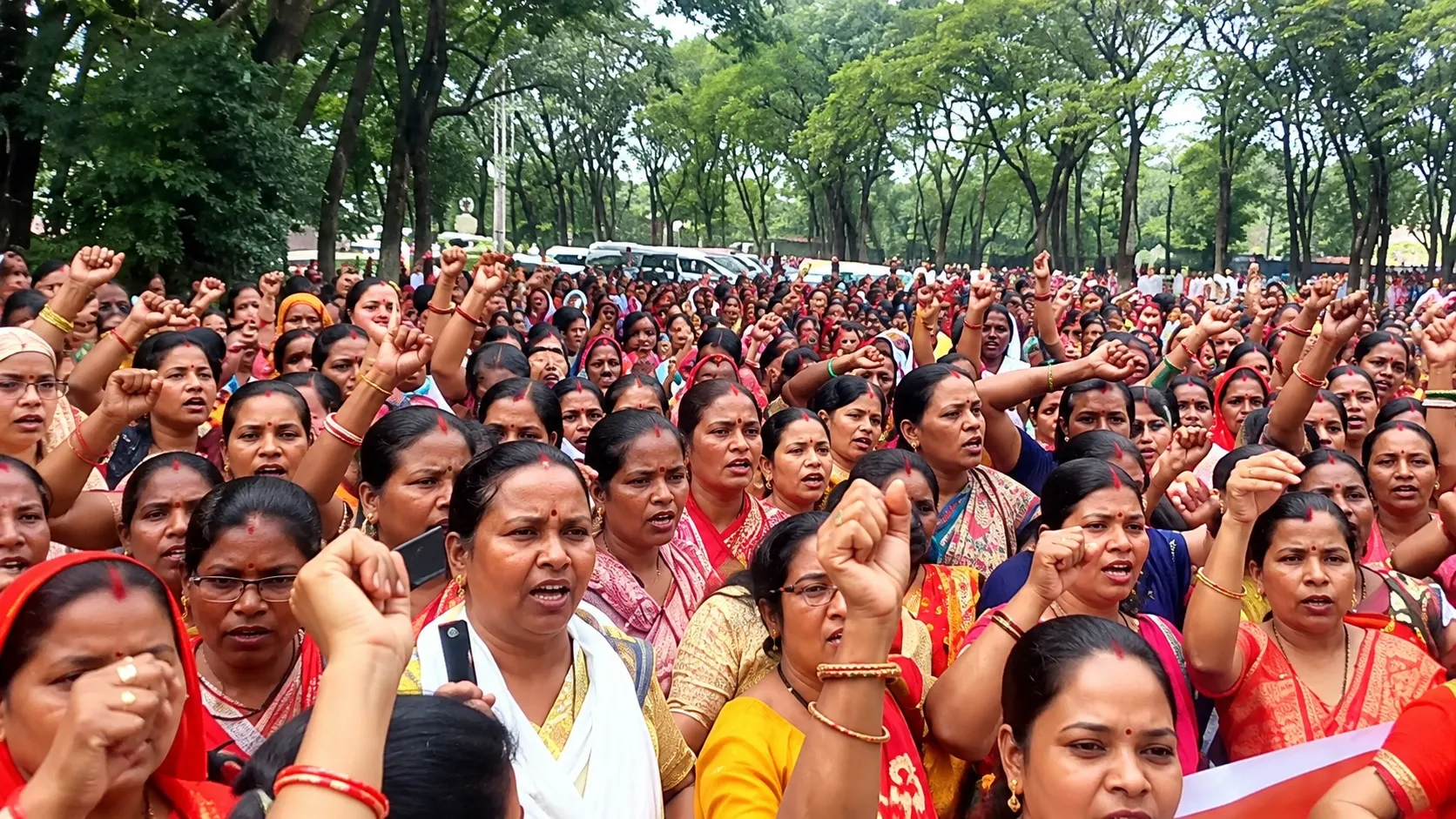
Raigarh | Correspondent: In Chhattisgarh’s Raigarh district, hundreds of Anganwadi workers and assistants took to the streets to protest, pressing for demands that have remained unaddressed for years. The protesters organized a large rally from Ramlila Maidan to the Collectorate, marching through the city’s main thoroughfares while raising slogans against the government and the administration.
Upon reaching the Collectorate, they submitted a memorandum addressed to the Minister of Women and Child Development and the Chief Minister, urging an immediate resolution to their grievances.
The primary demand of the protesters is for permanent employment (regularization). They argue that until they are regularized, the government should ensure a monthly payment of ₹30,000 for Anganwadi workers and ₹25,500 for assistants, in compliance with labor regulations. Given the rising cost of living, it has become extremely difficult to support their families on their current, limited honorarium. Despite Anganwadi centers having been in operation for approximately 51 years, the staff still lack access to many basic amenities.
Furthermore, they have requested that workers be promoted to the position of supervisor, and assistants to the position of worker, based on seniority and without any age restrictions. The memorandum also includes a demand for an annual increase of ₹1,000 in their honorarium, modeled after the policy implemented by the Madhya Pradesh government.
Regarding social security, the protesters have called for the provision of benefits such as pensions, group insurance, gratuity, and Provident Fund (PF).
Additionally, they have requested a one-time lump-sum payment of ₹5 lakh for workers and ₹3 lakh for assistants upon retirement, as well as the provision of compassionate appointments for dependents in the event of an employee's untimely death.
The workers point out that, in addition to their departmental duties, they are frequently assigned other government tasks; therefore, they urge the government to take immediate, positive action on their legitimate demands.