
Supreme Court Revises Stray Dog Order, Permits Sterilisation and Release
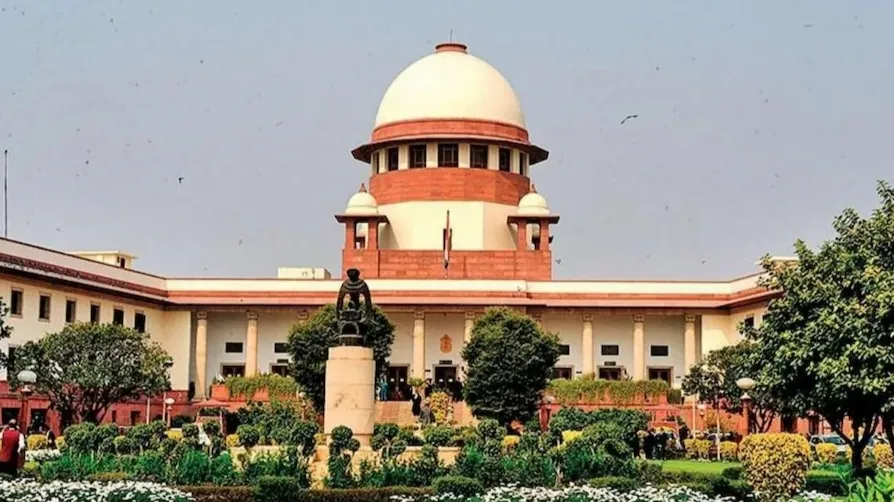
New Delhi | Desk: In a major policy shift toward humane animal management, the Supreme Court on Friday modified its earlier directive mandating the removal of all stray dogs from Delhi-NCR. The revised order now permits sterilised and vaccinated stray dogs to be released back into their original habitats.
The change follows widespread public and political pushback against the Court’s August 11 ruling, which had required that all strays be confined to shelters within eight weeks. The updated guidelines will now apply nationwide, with all States and Union Territories directed to work toward a uniform national policy.
A three-judge bench of Justices Vikram Nath, Sandeep Mehta and N.V. Anjaria clarified that only dogs infected with rabies or displaying aggressive behaviour should be confined to secure facilities. To reduce public conflict, the Court banned street feeding of stray dogs and instructed municipal bodies to create designated feeding zones in every ward. These zones must be clearly marked with signboards, supported by a helpline for reporting violations. Individuals feeding strays outside these areas may face legal consequences.
Municipal authorities have been ordered to strictly implement Animal Birth Control (ABC) rules, which require deworming, vaccination, sterilisation, and return of dogs to their original locations. For accountability, the Court mandated that individual dog feeders deposit ₹25,000 with the court registry, while NGOs engaged in stray care must deposit ₹2 lakh.
At Jantar Mantar, where activists and dog lovers had gathered ahead of the verdict, the ruling was greeted with celebration. One caregiver described it as a “victory for kindness and science,” restoring hope for a humane and balanced approach to the stray dog issue.
The decision also drew strong political backing. Congress leader Rahul Gandhi called it a “progressive step grounded in science,” while BJP MP and animal rights advocate Maneka Gandhi praised it as both “scientific and humane.” She also noted that, as per parliamentary discussions, the government has earmarked ₹2,500 crore for a nationwide ABC programme, though this figure has yet to be independently verified.
Municipal bodies, including the MCD, had already begun preparing shelter facilities following the earlier order. Officials now say the revised ruling reduces the immediate pressure, though shelters will still be needed for rabid or dangerous dogs. Plans are also underway to expand ABC centres across Delhi.
The case will return to the Supreme Court in eight weeks, by which time authorities are expected to demonstrate progress on implementation. The revised ruling is being hailed as a landmark moment in India’s efforts to balance public safety with compassion and sustainable solutions for stray dog management.







