
SC grants bail to juvenile in Narcotics case
Minor accused in drug case gets bail: SC
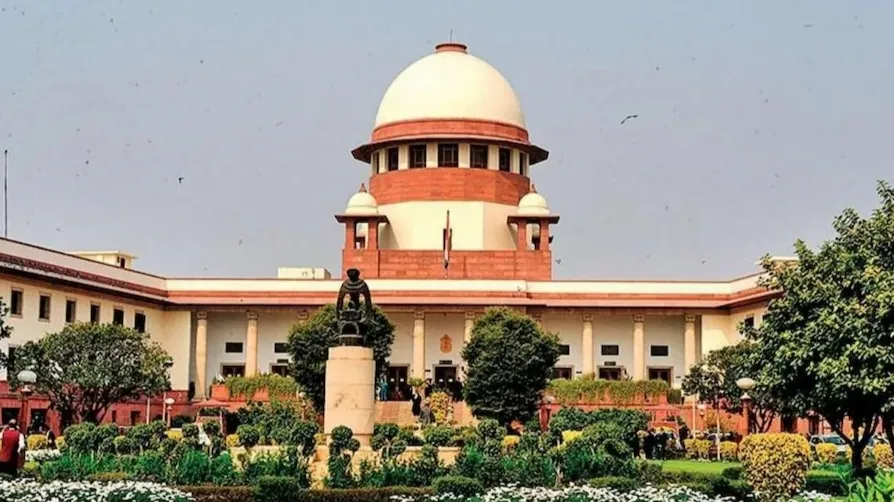
New Delhi | Desk: The Supreme Court has granted bail to a minor accused in a case involving narcotics. Adopting a stern stance during the proceedings, the apex court observed that both the Juvenile Justice Board (JJ Board) and the Chhattisgarh High Court had completely failed to conduct the objective assessment required under the Juvenile Justice (JJ) Act before denying relief to the minor.
A bench comprising Justice K.V. Viswanathan and Justice Vijay Bishnoi was hearing a Special Leave Petition (SLP) challenging an order passed by the Chhattisgarh High Court on March 12, 2026, which had upheld the decision to reject the juvenile's bail plea.
Hearing the matter on May 21, the Supreme Court bench stated, "We are not satisfied with the reasons cited for denying bail." The Court noted that no objective or impartial assessment had been conducted regarding the standards required to withhold bail under the provisions of Section 12 of the Juvenile Justice Act, 2015.
The Supreme Court clarified that the petitioner is a 'juvenile' in conflict with the law, the son of a domestic help employed at the residence of one of the prime accused in the case, and is currently lodged in an Observation Home (reformatory).
Upon reviewing the order of the JJ Board, the apex court found that the statutory requirements under Section 12 had not been adequately addressed. This law stipulates the specific circumstances under which bail may be denied to a child, such as if their release would expose them to moral, physical, or psychological danger, or if it would defeat the very ends of justice. However, neither the lower court nor the High Court conducted any substantive analysis regarding these factors.
Additionally, the Court also took into consideration the stringent provisions of Section 37 of the NDPS Act, which imposes extremely strict conditions for the grant of bail in cases involving narcotics. The Bench observed that, even after applying the parameters laid down under Section 37 of the NDPS Act, it was satisfied that a prima facie case for granting bail was made out in this matter. The Court arrived at this conclusion after taking into consideration the background of the petitioner and the pitiable condition of his mother.
During the hearing, Mr. Vikalp Sharma, counsel appearing on behalf of the petitioner, argued that the minor has no independent criminal history or background. He submitted that the petitioner is merely the son of a domestic worker employed at the residence of an accused and was denied relief without any proper legal evaluation.
Allowing the petition, the Supreme Court directed that the petitioner be immediately released on bail, subject to conditions to the satisfaction of the Juvenile Justice Board. With this order, the Special Leave Petition and all pending applications were disposed of.







