
Chhattisgarh records highest leprosy prevalence in India
Chhattisgarh records highest leprosy
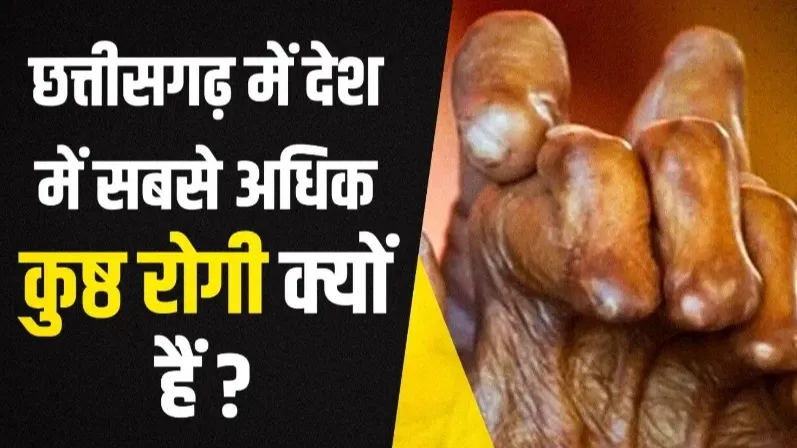
Raipur | Correspondent: Chhattisgarh has the highest number of leprosy cases in the country. As of March 2025, the state recorded 1.80 cases per 10,000 population.
In contrast, Tripura (0.02), Meghalaya (0.03), Manipur (0.05), and Jammu and Kashmir (0.07) reported the lowest leprosy rates. They are followed by Puducherry, Kerala, and Nagaland with 0.11 cases per 10,000 population.
Across India, the leprosy prevalence rate has dropped sharply over the decades - from 57.2 cases per 10,000 in 1981 to an estimated 0.57 cases in 2025. The percentage of children among new cases has also decreased from 9.04% in 2014–15 to 4.68% in 2024–25.
By March 2025, 31 states and 638 districts have achieved a prevalence rate of less than one case per 10,000 people, helping India maintain its leprosy elimination status at the national level.
After Chhattisgarh, Jharkhand (1.46), Chandigarh (1.35), and Maharashtra (1.12) have the highest leprosy rates - all exceeding one case per 10,000 people. The remaining states are below this mark.
Leprosy prevalence across states (cases per 10,000)
Andhra Pradesh 0.46, Arunachal Pradesh 0.15, Assam 0.26, Bihar 0.85, Goa 0.45, Gujarat 0.38, Haryana 0.13, Himachal Pradesh 0.14, Karnataka 0.27, Madhya Pradesh 0.82, Odisha 1.37, Punjab 0.14, Rajasthan 0.14, Sikkim 0.17, Tamil Nadu 0.26, Telangana 0.46, Uttar Pradesh 0.37, Uttarakhand 0.22, West Bengal 0.46, Andaman and Nicobar Islands 0.19, DD and DNH 0.63, Delhi 0.71, Lakshadweep 0.14, and Ladakh 0.33.
India’s leprosy control program has been a major public health success. From 39.19 lakh cases under treatment in 1981, the number has come down to 0.82 lakh in 2025-a 98% reduction in active cases and a 99% fall in prevalence over 44 years. Since 2006, when India first reported a national rate below 1 (0.84), there has been a 37% decline in new cases.
What is Leprosy?
Leprosy, also known as Hansen’s disease, is a chronic infectious illness caused by the bacterium Mycobacterium leprae. It mainly affects the skin, nerves, eyes, and respiratory tract.
Common symptoms include pale or discolored skin patches, loss of sensation (touch, pain, heat, or cold), muscle weakness, deformities in the hands, feet, or face, difficulty closing the eyes, and blurred or reduced vision.
Leprosy spreads through droplets from the nose and mouth of an untreated person, usually after prolonged and close contact. The disease can cause visible disfigurement, often leading to social stigma and fear.
Leprosy is classified into two main types:
Multibacillary (MB): A severe form with a large number of bacteria found in skin tests.
Paucibacillary (PB): A milder form with very few or no bacteria present.
Treatment and Control
The introduction of multidrug therapy (MDT) in India in 1983 was a major step forward in leprosy control. This treatment is provided free of charge to patients by the World Health Organization (WHO). Early diagnosis and treatment through MDT can prevent disability and deformity.
However, "elimination" does not mean complete eradication of the disease. New cases will still emerge. The goal is to identify each case early so that the chain of transmission is broken and new infections among children are prevented.
Toward this end, the government is making efforts through continuous surveillance, awareness campaigns, and increased community participation. Training programs are being strengthened, especially among rural, tribal, and disadvantaged populations, to ensure that no case goes unreported or untreated.







