
Coal vs Clean Energy: is Chhattisgarh ready to switch?
Coal vs Clean Energy
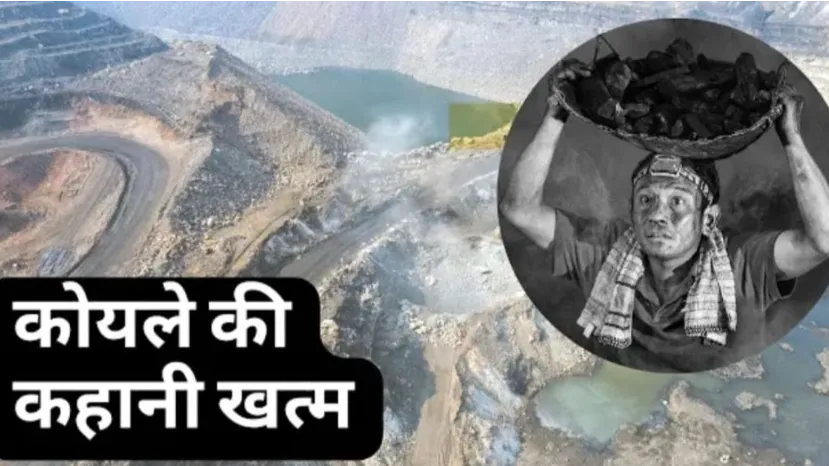
Ayushi Sharma | Raipur : Chhattisgarh today stands at a crossroads where its past and future seem intersecting. The state that has powered India for decades though its coal reserves where Korba situated on the banks of the rivers Hasdeo and Ahiran also known as ‘Power Capital of India’, and where the livelihoods of the several families have been dependent on the dust and mines and the steam of thermal plants. But the situation is now changing. The world is preferring to move towards a cleaner and affordable energy.
A recent report by the international organization Ember makes it clear that continued reliance on coal in the coming years could prove economically unsustainable for states like Chhattisgarh. This means that the state which once lit up the nation with its coal-based electricity will now need to rewrite its energy story not with coal, but with the power of the sun and storage.
India’s energy landscape is changing rapidly. For decades, coal was considered the backbone of the nation’s growth fueling factories, railways, and cities alike. But the global energy paradigm is shifting. New technologies are emerging, solar and wind power have become far more affordable, and India must now rethink its electricity future.
Recently, Ember released a report that has generated widespread discussion across the country. Titled “The Role of Coal in India’s Energy Transition,” the report clearly states that building additional coal power plants beyond the existing plans would be economically unviable.
According to the report, if India successfully achieves the solar, wind, and storage targets set under its National Electricity Plan 2032, the share of coal in power generation will fall sharply. This means that many coal plants currently under construction or in the planning stage will either operate at much lower capacity or be shut down entirely.
Ember’s analysis suggests that if India meets its renewable energy targets by 2032, the average utilization rate of coal-fired power plants known as the Plant Load Factor (PLF) will decline from 69 percent to 55 percent. In other words, plants that currently run almost year-round will, in the future, operate for less than half that time.
In such a scenario, around 10 percent of coal plants currently being built could face complete closure, while about 25 percent may operate only occasionally. This implies that much of the investment in these projects could be at risk, as the plants will remain functional but underutilized.
Another key point highlighted in the report is that as solar and wind power expand and battery storage becomes cheaper, the cost of generating electricity from coal will continue to rise. Ember estimates that the current average cost of coal-based power ₹4.8 per unit could increase to ₹6 per unit by 2032.
In contrast, the cost of electricity from solar and wind energy, even when combined with battery storage, will remain between ₹4.3 and ₹5.8 per unit. Clearly, renewable energy is not only environmentally sustainable but also economically more viable.
The question now arises: which states will be most affected? The answer is Chhattisgarh.
Chhattisgarh is known as the energy heart of India. Districts like Korba, Raigarh, Surguja, and Bilaspur are among the country’s largest coal-producing regions. Major power producers such as the National Thermal Power Corporation (NTPC), Chhattisgarh State Power Generation Company, BALCO, Jindal Power, and Adani Power supply electricity to the nation from here.
Coal plays a crucial role in the state’s economy. Thousands of laborers work in mines, along with truck drivers, machine operators, maintenance staff, contractors, and numerous small businesses. Coal, therefore, is not just a source of electricity but also a major source of livelihood and income. However, as coal-based power generation becomes increasingly expensive and less necessary, this situation poses a serious challenge for a state like Chhattisgarh.
Ember’s report indicates that coal demand will decline in the coming years. This means that the production capacity of coal mines in regions such as Korba and Raigarh will not be fully utilized.
In this situation, the state faces two choices: either continue with the old pattern and bear the burden of falling utilization and rising costs, or adopt a forward-looking energy policy by investing in solar and storage technologies in time.
Why is coal-based power becoming more expensive?
A major reason is that coal plants will no longer operate continuously. During the day, when the sun is shining and solar panels generate ample power, coal plants must slow down or shut their machines. But at night, when solar power is unavailable, these same plants have to restart operations. This constant on-and-off cycle puts stress on machinery, increases maintenance expenses, and lowers fuel efficiency.
Moreover, fixed plant charges known as capacity charges remain the same, whether the plant runs at half capacity or full capacity. As a result, the per-unit cost of electricity rises sharply.
Financial strain and solar opportunity
Chhattisgarh’s power distribution companies are already under financial pressure. If coal power continues to grow more expensive, either consumers will have to pay higher bills or the government will need to increase subsidies. Both outcomes could strain the state’s finances.
However, this risk can be reduced if the state acts in time and adjusts its energy policies. Chhattisgarh’s geography and climate are ideal for solar energy it enjoys strong sunlight most of the year, and many regions have large tracts of vacant land suitable for setting up solar parks.
If the government prioritizes solar projects in collaboration with industries, Chhattisgarh could not only meet its own electricity demand but also sell surplus power to other states in the coming years.
The role of battery storage
Battery storage technology will play a key role in this transformation. Earlier, the biggest limitation of solar energy was that power generation stopped when the sun set. But now, advanced and durable batteries can store solar energy produced during the day for use at night.
Ember’s report notes that new-generation batteries, such as sodium-ion batteries, carry minimal fire risk and do not require expensive minerals.
This opens up a major opportunity for India and especially for Chhattisgarh to become a hub for battery manufacturing. The state already has a strong foundation in heavy industries, along with access to electricity and mineral resources. As a result, the battery and solar equipment manufacturing sector could flourish here.
A question of social and economic balance
This transition is not only an industrial or technological shift but also a matter of social and economic balance. Millions of people are directly or indirectly dependent on the coal sector. Therefore, reducing dependence on coal must go hand in hand with creating alternative employment opportunities.
To achieve this, the government and industry must launch reskilling and job rehabilitation programs. For instance, mine workers can be trained in fields such as solar panel installation, electric vehicle maintenance, battery assembly, or grid management. Similarly, contractors and transporters involved in coal logistics could be integrated into solar and battery supply chains.
This shift must be gradual and just. A sudden move from coal to solar is neither practical nor fair to workers. But it is vital to develop a clear roadmap outlining how quickly coal use will decline and renewable capacity will grow over the next decade.
Ember’s recommendations
Ember offers several concrete suggestions in its report:
Convert old thermal power plants to flexible operation modes rather than shutting them down completely. This will allow them to start up quickly when needed and shut down when demand drops, ensuring grid stability and lower costs.
Modernize power distribution and procurement systems. Currently, distribution companies (discoms) must pay fixed capacity charges each year, regardless of how much electricity they use. Ember recommends making these contracts seasonal and demand-based, so plants are paid only when needed - reducing the financial burden on power companies.
Improve the investment environment for solar and battery storage projects. If the Chhattisgarh government provides affordable land, streamlined permits, and reliable transmission infrastructure, private investors will be encouraged to participate.
Rethinking reliability
A major challenge in this transition is public perception. Many still believe coal is the most reliable source of electricity. However, global experience shows that combining solar energy with storage can ensure equally stable and continuous power.
Chhattisgarh must realize that reliability will come not from burning more coal, but from greater flexibility. In the future, coal will serve a complementary role - providing electricity when solar or wind output is low. Such a hybrid energy system will not only be more cost-effective but also better for the environment and public health.
Industrial regions like Korba and Raigarh already suffer from severe air and water pollution. A gradual transition to solar and wind power could significantly improve local air and water quality.
Charting Chhattisgarh’s energy future
The Chhattisgarh government now has the opportunity to shape its energy future. If the state aims to expand its solar capacity to 10,000 MW in the next decade, promote battery storage industries, and implement a Just Transition plan for coal-sector workers, it could become a model for other Indian states.
It is important to note that Ember’s report is not an environmentalist vision but a data-driven economic analysis. Using computer modeling of India’s power system, it demonstrates that if solar, wind, and battery storage continue to grow at their current pace, additional coal investments will become economically unviable.
The report’s message is clear: coal will not disappear overnight, but its role will inevitably change. In the coming years, coal will function as a supporting energy source, while solar, wind, and storage will take center stage.
For Chhattisgarh to lead this transition, it must transform not only its power generation but also its distribution and consumption systems. Rooftop solar panels, rural micro-grids, and clean energy corridors for industries are the pathways forward.
Ultimately, the future of energy must be clean, affordable, and locally produced. Coal powered India for decades, but now the sun and wind are ready to take on that role. If Chhattisgarh begins its preparations today, it can achieve this transformation within the next ten years securing both economic growth and environmental well-being.







