Chhattisgarh rivers turning to mining zones
Sand crisis in Chhattisgarh: rivers turning to mining zones
Ayushi Sharma | Correspondent: After water, sand is considered as one of the most widely used natural resources in the world. However, alarming overexploitation has pushed this essential resource towards a global crisis. In Chhattisgarh this worldwide problem has now taken the shape of local disaster.
The demand for sand has turned rivers into mining zones, and illegal mining has become an organizes buisness. There is hardly a river in the state that is not being mined for sand, be it the Mahandai, or the Shankini-Dankini, Bagh, Arpa, Hasdeo, Pairi, Kharun, Shivnath or Kanhar.
A Global problem with local consequences
According to study by United Nations Environment Programmes (UNEP), billions of sand and gravel are being consumed globally every year. The sand is primarily used in building houses, roads, bridges, dams and urban infrastructure.
In the blind race for development, sand consumption has increased so rapidly that nature does not get the time to replenish it. What takes decades to form is being exploited in a matter of days.
Rivers loosing their identity
Whether it is the Kanhar river in Ramanujganj, the Bagh river in Rajnandgaon, or the Sankini-Dankini rivers in Dantewada, these rivers are not just water sources. They are deeply linked to the cultural, mytholgical identity of these regions.
But today, these rivers are increasingly being identified not by their names, but by their sand ghats, tractor routes, and mining points. In many places, people mention the name of the sand ghat even before naming the river itself. Slowly, the identity of these rivers is changing.
Mahanadi and Other rivers under severe threat
The Mahanadi considered as the lifeline of Chhattisgarh, is under threat. Large-scale sand mining is taking place from its banks and riverbed in the Dhamtari, Raipur, Balodabazar and Arang regions. The Arpa river already suffering from pollution and industrial pressure, is also continuously being mined. The Hasdeo River, already burdened by coal mining and industries, is becoming even more vulnerable due to sand mining.
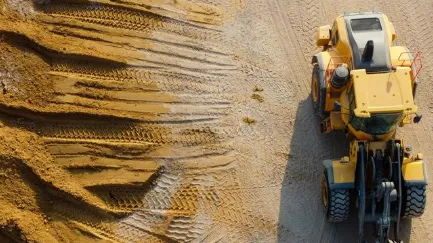
Besides, illegal sand mining in Chhattisgarh is no more a secret rather is carried out openly at both day and night duration. Machines are deployed at the riverbanks, tractor-trolleys line up and sometimes the river's course is temporarily diverted by building earthen dams to allow for deeper excavation.
Despite rules clearly stating that sand must stop during the monsoon season, whereas in reality, extraction continues even during heavy rains. In many places, mining goes far beyond the permitted depth. Such large-scale violations are only possible when there is administrative protection or deliberate neglect.
From time to time, the administration conducts raids to seize tractors or trucks, but these actions have become merely symbolic. In areas where illegal mining has been going on for years, the seizure of a few vehicles does not prove that the system is active. In reality, it has become a system where small vehicles are caught, while the larger network remains untouched.
The most serious impact of sand mining is on the physical structure of the river. When large quantities of sand are removed from the riverbed, the bed deepens, and the river's equilibrium is disrupted. In many places, it has been observed that the water now flows towards the banks instead of through the middle of the river. This accelerates bank erosion, and agricultural land is gradually being swallowed by the river.
Groundwater crisis in villages
In several areas of Chhattisgarh, farmers have complained that their fields are being eroded into the river little by little every year. This damage is not the result of floods or natural disasters, but rather the consequence of continuous mining.
Sand is not just soil for the river; it is the foundation that holds the water. The sand on the riverbed allows water to seep slowly into the ground, thus replenishing the groundwater. When this sand is removed, the water flows away quickly and does not remain in the ground.
The impact of this is first seen in the villages. In many rural areas of Chhattisgarh, wells and handpumps are now drying up earlier in the summer. Where water was previously available until April-May, the water level now drops in March. This change has not occurred suddenly, but is the result of years of sand mining.
Sand mining not only affects humans but also weakens the entire ecosystem of the river. Fish, crabs, and other aquatic life depend on the structure of the riverbed. The removal of sand destroys their breeding grounds and habitats. Many fishing communities report a significant decline in fish populations over the past few years.
This is not just a crisis of employment, but a clear indication that the river is gradually losing its natural capacity.
Laws exist, enforcement does not
India does not lack laws related to sand mining. Environmental Impact Assessments, state mining regulations, and orders of the National Green Tribunal are all in place. These rules clearly state that sand mining must be carried out only after assessing a river’s carrying capacity.
However, in Chhattisgarh, most of these rules remain confined to paper.
The government maintains data on legal mining, but the real scale of illegal extraction remains unknown. This uncertainty is the biggest strength of the sand mafia. When damage is not properly measured, accountability becomes impossible.
More than an environmental issue
Sand mining in Chhattisgarh is not just an environmental issue it is a question of governance, accountability, and political will.
Will rivers continue to be destroyed in the name of development? Will village water resources be sacrificed to build cities? If the current situation continues, many rivers will lose their perennial nature and turn into seasonal streams.
When that happens, agriculture, groundwater, and ecological balance the foundation of Chhattisgarh will collapse.
Development or Plunder?
The issue of sand mining in Chhattisgarh is not merely an environmental one. It is a question of governance, accountability, and political will. Will rivers be destroyed in the name of development? Will the water of villages be diverted to construct buildings in cities? If this continues, many rivers will cease to be perennial and will be reduced to seasonal streams. Then, neither agriculture, nor groundwater, nor the natural balance upon which Chhattisgarh depends will survive.
The need for sand cannot be denied, but calling the plunder of sand "development" is also wrong. Until illegal mining is treated as a serious crime and dealt with strictly, the rivers of Chhattisgarh will continue to be silently plundered, and the administrative silence will persist.
And the cost will be paid not today but by future generations.