Ram’s Maternal Home, Chandkhuri, Keeps Unique Dussehra Tradition Alive
While much of Chhattisgarh marks Vijayadashami with the burning of Ravana’s effigy, the village of Chandkhuri follows a different calendar. Here, the ritual takes place a day later, on Ekadashi, locally known as Gyaras
Raipur | Correspondent: While much of Chhattisgarh marks Vijayadashami with the burning of Ravana’s effigy, the village of Chandkhuri follows a different calendar. Here, the ritual takes place a day later, on Ekadashi, locally known as Gyaras, a tradition that has survived for centuries and continues to set the village apart.
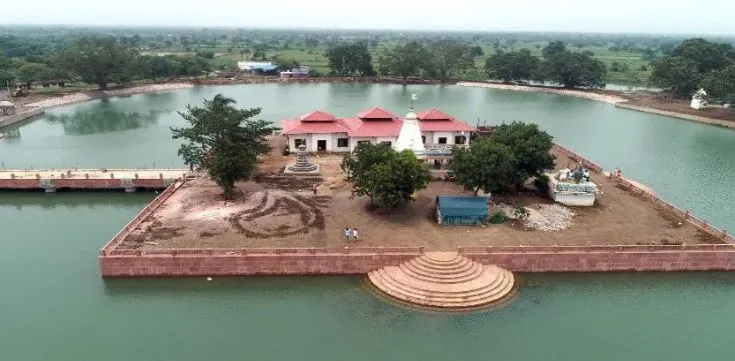
Regarded as the birthplace of Mata Kaushalya and the maternal home of Lord Ram, Chandkhuri holds a special place in the region’s religious and cultural landscape. Its distinctive Dussehra celebration is rooted not only in faith but also in a community tradition that once brought people from neighbouring villages together for an elaborate Ramlila.
In earlier times, Chandkhuri was known for its grand Ramlila performances, which attracted large crowds from surrounding villages. People would celebrate Dussehra in their own villages on Vijayadashami and then travel to Chandkhuri the following day to watch the Ramlila and witness the burning of Ravana’s effigy.
Ramesh Sharma, priest at the Mata Kaushalya Temple, said the village continues to observe Dussehra on Gyaras, when Ravana’s effigy is set ablaze. Unlike Chandkhuri, most other villages in Chhattisgarh conduct the ritual on Vijayadashami itself.
Local resident Sanjay Baghel recalled that the village once hosted large-scale Ramlila performances that drew visitors from far and wide.
“Chandkhuri was a prominent village, and people were enthusiastic about coming here to watch Ramlila and celebrate Dussehra,” he said, describing how the celebrations brought neighbouring communities together.
Although the grand Ramlila performances have since faded, the village has retained its distinctive date for the festival.
The tradition also lives on through the work of local artisan Chaman Vishwakarma, who prepares Ravana’s effigy for the annual celebration. The craft has been passed down through generations in his family, with his father making the effigies before him.
Vishwakarma also creates idols of Lord Ganesh and Goddess Durga for local festivities. Once the idol-making season is over, he turns his attention to preparing Ravana’s effigy for Dussehra.
For his family, the work is more than a seasonal assignment; it is a longstanding craft that connects generations and remains an integral part of Chandkhuri’s festival preparations.
Chandkhuri will observe its traditional Dussehra celebrations on October 21 this year, a day after Vijayadashami, with Ravana Dahan scheduled for Gyaras.
The village’s observance offers a glimpse into how local customs can shape the way a widely celebrated festival is experienced. While the format of the festivities has changed over the years, Chandkhuri’s decision to retain the day-after tradition reflects a cultural legacy that continues to distinguish it from other parts of the state.