
Chhattisgarh HC rejects pleas for return of unused Hasdeo Bango project land
The Chhattisgarh High Court has dismissed two interconnected petitions seeking the return of land acquired for the Hasdeo Bango (Minimata Bango) canal project.
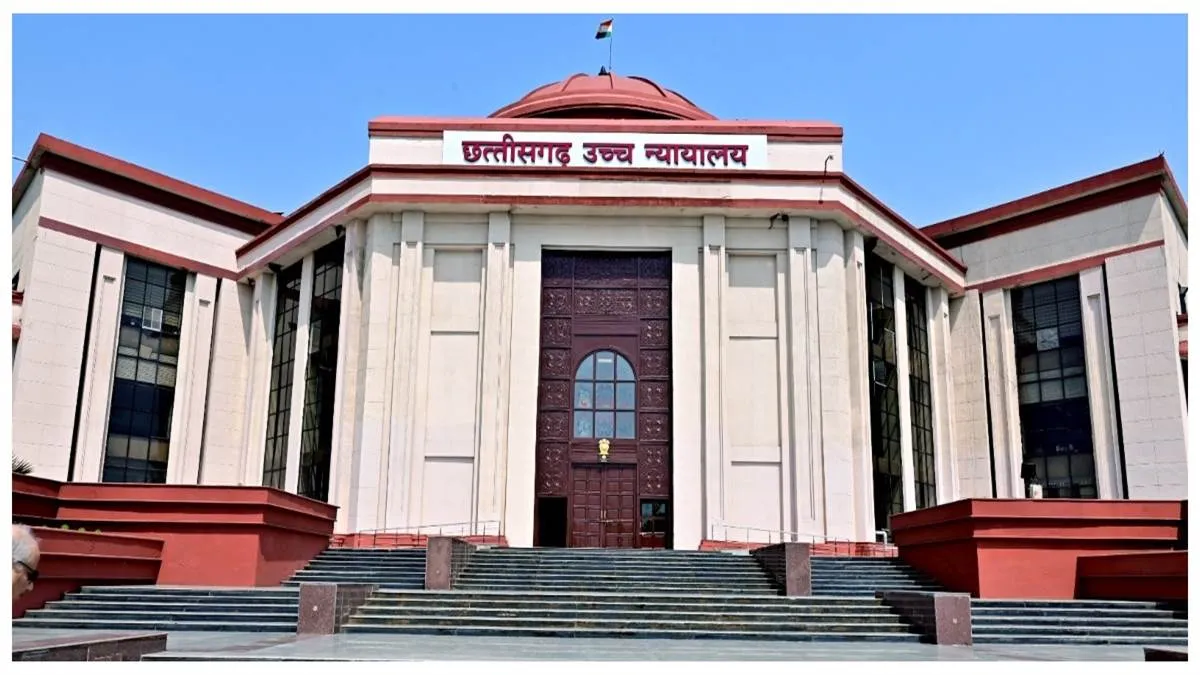
Bilaspur | Correspondent: The Chhattisgarh High Court has dismissed two interconnected petitions seeking the return of land acquired for the Hasdeo Bango (Minimata Bango) canal project. In its ruling, the court clarified that the non-utilization of acquired land does not grant former landowners any legal or enforceable right to demand its return or re-transfer.
Justice Amitendra Kishore Prasad issued this joint order on November 5. The court observed, "The mere non-utilization of acquired land does not confer upon the former landowners a right to reclaim it especially when, under the 1894 Act, the land has fully vested in the State and remains required for its original or related public purposes."
The case was filed by members of a family from the Kharsia region of Raigarh district, whose agricultural land was located in the village. The land in question—comprising 0.598 hectares and 0.356 hectares was acquired under the Land Acquisition Act of 1894, with the acquisition process concluding upon the issuance of an award on February 28, 2004.
The petitioners had challenged an order dated September 27, 2021, issued by the Raigarh Collector, which rejected their applications for the return of the unused portion of the land.
The petitioners argued that the construction of the canal was completed over a decade ago, and that demarcation and inspection reports indicated a significant portion of the land remained unaffected.
They cited Section 101 of 'The Right to Fair Compensation and Transparency in Land Acquisition, Rehabilitation and Resettlement Act, 2013,' which contains provisions for the return of land that has remained unused for a period of five years. On the other hand, the government counsel argued that the land had come entirely under the control of the state government and that the 1894 Act did not contain any provision similar to Section 101 of the 2013 Act. The canal has been providing irrigation since the year 2005–06, and the land along its banks is necessary for inspection, maintenance, and supervision.
Following directions issued by the court on June 15, 2026, the Executive Engineer and the Collector submitted an affidavit stating that the open space on both banks is required for inspection paths and maintenance. Furthermore, the remaining portion has been earmarked for potential temporary shelters, storerooms, and site offices.
The High Court observed that the petitioners had neither challenged the original acquisition proceedings nor the 2004 award. Citing Supreme Court judgments, the court held that Section 101 of the 2013 Act applies only to acquisitions made under that specific Act, and not to cases governed by the 1894 Act.
The court noted that a canal project requires more land than just the area physically occupied by the water channel itself, and the absence of a structure does not render the land 'surplus.'
In matters involving state decisions, judicial review is limited to examining whether the decision is malicious, arbitrary, or an abuse of power. Finding no grounds to interfere with the Collector's order, the court dismissed both petitions, with no order as to costs.