
Middle East conflict triggers global Helium shortage
Helium crisis alert
New Delhi | Desk: The ongoing conflict in the Middle East, pitting the U.S. and Israel against Iran, has now seized the pulse of the global economy. The most severe impact of this geopolitical tension has fallen upon the supply of helium gas, pushing medical and high-tech industries worldwide to the brink of crisis. Approximately one-third of the global helium supply has been disrupted as a result of this conflict and the ensuing retaliatory actions.
The shortage of helium, an element indispensable for critical medical procedures such as MRI scans, as well as for the semiconductor industry, has sent shockwaves through the international market. The epicenter of this crisis is Qatar, one of the world's leading helium producers, where both production and shipping operations have been severely impacted. Helium Production in the Gulf Region and Qatar's Central Role
The Gulf nations constitute the backbone of the global helium supply chain. According to data from the U.S. Geological Survey (USGS), Qatar produced approximately 63 million cubic meters of helium in 2025, accounting for roughly one-third of the world's total output of 190 million cubic meters. Although other Gulf nations are not major helium producers themselves, exports from Qatar and other regions rely entirely on the maritime routes and strategic choke points that traverse the coastal waters of these countries. Foremost among these is the 'Strait of Hormuz,' through which the majority of global maritime trade passes.
Closure of the Strait of Hormuz and the Transport Crisis
This crisis began on March 2, when Ebrahim Jabari, a senior advisor to Iran's Islamic Revolutionary Guard Corps (IRGC), announced that the Strait of Hormuz had been "closed." He issued a stern warning that should any vessel attempt to traverse the strait, the Iranian Navy would open fire upon it. Although Iranian officials later clarified that the route is not completely closed, they have nevertheless implemented strict new regulations.
It is now mandatory for any vessel wishing to traverse this narrow waterway to obtain permission from Tehran. Consequently, traffic through this route has ground to a near-halt, with only a limited number of vessels, primarily from India, Pakistan, and China, being granted passage. Almost the entirety of Qatar's helium exports relies on this specific waterway, as no alternative maritime routes are available.
Key Factors Behind the Decline in Production
Helium production is directly linked to the production of Liquefied Natural Gas (LNG), as helium is extracted as a by-product during the LNG manufacturing process. Qatar's state-owned energy company, QatarEnergy, has announced that LNG production has been suspended at its facilities in Ras Laffan and Mesaieed following Iranian attacks. Recent Iranian missile strikes on a major LNG hub in Ras Laffan, which processes 20 percent of the global LNG supply, have caused extensive devastation.
These attacks have crippled 17 percent of Qatar's export capacity, resulting in projected annual revenue losses of $20 billion over the next five years. As a direct consequence, QatarEnergy has announced a 14 percent reduction in its exports of liquid helium.
Global Dependence and Economic Impact
South Korea, Japan, Taiwan, and China are the largest purchasers of helium from Qatar. Since the majority of helium trade is conducted through long-term contracts, immediate fluctuations in pricing may not be felt; however, a severe shortage in supply is inevitable.
Experts predict that a disruption lasting just 30 days could trigger a 10 to 20 percent surge in helium prices, while a prolonged disruption of 90 days could drive prices up by as much as 50 percent. South Korean policymakers have already warned that this conflict could disrupt the supply of materials essential for semiconductor manufacturing a development that would deal a major blow to the global tech market.
The Indispensability of Helium and Future Challenges
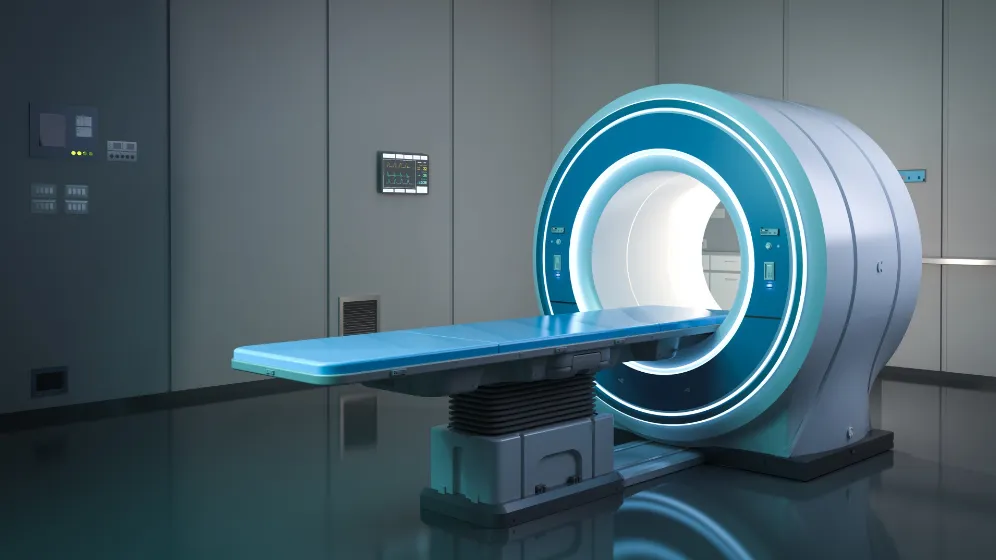
The significance of helium lies in its unique properties. It can be cooled to temperatures approaching absolute zero (0 Kelvin), making it the only viable option for cooling superconducting magnets. These very magnets are utilized in MRI machines. Globally, approximately one-quarter of all helium is consumed by the medical sector to power MRI scanners.
Furthermore, helium is chemically inert, allowing it to function as a cooling agent during chip manufacturing without causing any contamination. There is currently no artificial substitute available for helium, implying that a shortage would inevitably slow down the pace of technological advancement.
Although the medical industry is actively working on helium-free MRI systems and helium recycling technologies, the vast majority of machines currently in operation still rely on liquid helium.
Alternative Producers and Market Status
The United States currently stands as the world's largest producer of helium, accounting for 40 percent of the global supply (81 million cubic meters). Companies such as ExxonMobil, North American Helium, and Helix Exploration are striving to ramp up production; however, they, too, remain dependent on supplies originating from the Gulf nations.
Most recently, Airgas, a subsidiary of Air Liquide, declared a "force majeure" in the U.S., resulting in a 50 percent reduction in its shipments. This global crisis underscores the fragility of the helium supply chain and demonstrates how geopolitical tensions have the potential to cast a shadow over both modern medicine and the future of high technology.







