President Droupadi Murmu Meets 50 Bell Metal Artisans from Chhattisgarh
A 50-member delegation of bell metal artisans from Kondagaon and Raigarh met President Droupadi Murmu at Rashtrapati Bhavan, bringing national recognition to Chhattisgarh’s traditional Dhokra craftsmanship and tribal heritage.
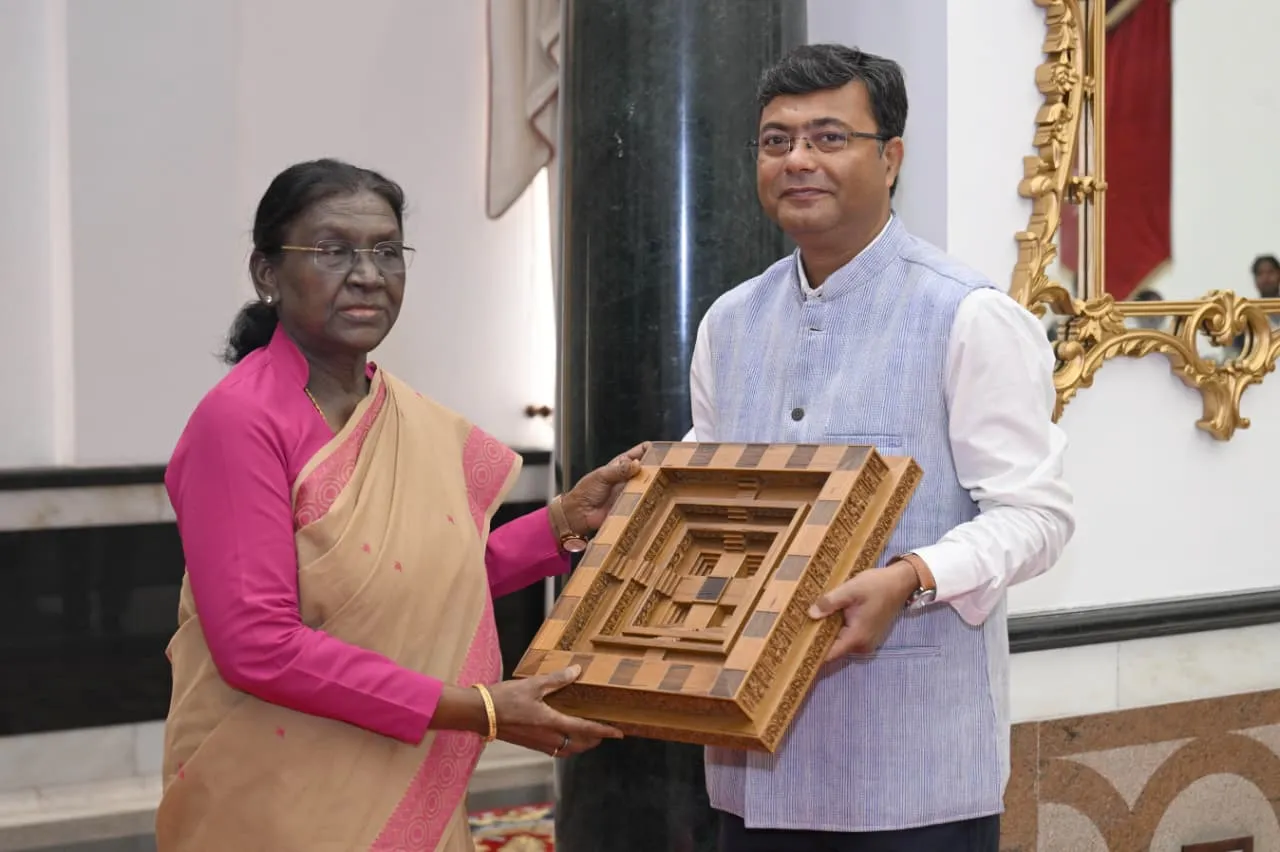
Raipur: Chhattisgarh’s rich craft heritage and traditional artistry received special recognition at Rashtrapati Bhavan in New Delhi on Monday, as President Droupadi Murmu met with a 50-member delegation of bell metal artisans from the state's Kondagaon and Raigarh districts. The interaction marked a proud milestone for the craftsmen who have kept the centuries-old traditional bell metal art alive across generations.
The special meeting at Rashtrapati Bhavan provided a national platform to Chhattisgarh’s vibrant tribal culture, indigenous craftsmanship, and the generational dedication of its artisans. Chhattisgarh Handicraft Development Board Chairperson Shalini Rajput and Secretary Rajesh Singh Rana were also present during the occasion.
The visit was organized following President Murmu’s expressed desire to interact with bell metal artisans from Kondagaon and Raigarh registered under the Chhattisgarh Handicraft Development Board. Acting on this, the delegation traveled to the national capital to showcase their cultural legacy.
Chhattisgarh’s bell metal craft, particularly Bastar’s renowned Dhokra art tradition, is celebrated for its distinct lost-wax casting technique and intricate detailing. The handcrafted metal figurines of deities, animals, birds, and depictions of folk life deeply reflect the state's indigenous tribal roots.
Artisans from Kondagaon, in particular, have preserved this ancestral craft for generations while maintaining a distinct artistic identity.
Rashtrapati Bhavan regularly hosts traditional artists and craftsmen from across the country to represent India's diverse cultural heritage. In this series, the interaction with Chhattisgarh’s artisans stands as a significant initiative to highlight the state's living handicraft traditions on a national stage, underscoring both its cultural prosperity and artistic excellence.