
Wild bees an obstruction in Anti-Naxal operations in Bastar
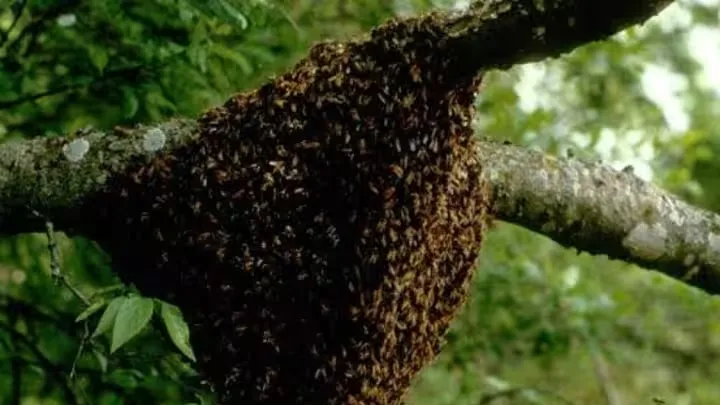
Raipur | Correspondent: Security forces deployed in Chhattisgarh's "Red Corridor" are facing new enemies, swarms of wild bees who are posing a significant obstacle to anti-Naxal operations in the forested interiors. Forces despite defeating alleged Maoists, who carry bounties worth millions of rupees are facing this issue.
A recent video during an anti-Naxal operation in Bijapur district clearly illustrates this problem where an injured soldier lying on the ground while his comrades carefully remove the bee stings embedded in his body, while a patrol team attempts to regain control of the situation.
According to officials, this danger is exacerbated when search and patrol teams traverse dense forested terrain and inadvertently come close to huge beehives hanging from trees or rocks. Even a slight vibration on the ground, the sound of a wireless set, or the clash of weapons is sometimes enough to trigger a violent reaction from bees. Once disturbed, entire swarms attack a team of soldiers.
A senior officer posted in the South Bastar region said, "These attacks not only injure soldiers but can halt operations for hours. In some parts of the forest, the hives are so large and numerous that our soldiers have no choice but to hide in place until they calm down. Running away or firing could make the situation even more dangerous."
There is also growing concern that Naxalites may try to exploit this natural hazard. Inputs from some sensitive areas suggest that Naxalites deliberately provoke bee colonies by throwing stones at hives on narrow forest trails and mountain paths frequently used by security forces. "The motive appears to be to slow down troop movement, create confusion, and then use the opportunity to launch an ambush," an officer said.
In some incidents, bee stings have caused health problems for security personnel on operations. In several cases, teams have been forced to abort operations due to swelling, allergic reactions, and severe irritation around the eyes. Many soldiers have had to return to base camps for first aid and monitoring after receiving multiple stings. These cases pose a major operational challenge for security forces, but they are rarely reported in the media. This incident only came to light after the video surfaced.
For soldiers already operating under the constant threat of hidden IEDs, sniper fire, and close-quarters ambushes, this new risk has further complicated anti-Naxal operations. Commanders say they are now taking the "bee threat" into account when planning routes, stops, and timings for long-distance patrols and search operations in the densely forested areas of Bijapur.
Battling wild animals, Naxalite violence and now aggressive bee swarms, soldiers on the ground say the battle in the forests of Bastar is not just against armed insurgents, but also against the unpredictable creatures of nature in a difficult terrain.