Why Chhattisgarh can’t ignore the climate call from COP30
The climate message from COP30
Ayushi Sharma | Desk: When the world leaders convened for the COP30 summit in Belem, the green heart of the Amazon the atmosphere transformed into a court of harsh truths. This time the debate, went beyond tree canopies and temperature graphs, the real issue was money.
It was clearly stated that the global financial system has failed to align with the climate change goals, and this failure is gradually leading to clear warning for the planet's future.
COP 30 has begun, for a state like Chhattisgarh where the major economy is dependent on coal and mining, yet faces some of the worst impacts of climate change like declining forest covers and rising temperatures to erratic rainfall this global discussion carries deep relevancy.
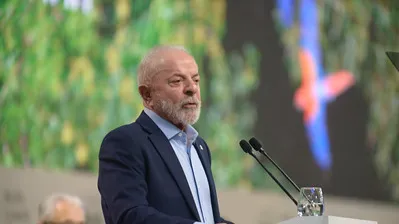
When the Amazon forests burn, the effects are not confined to South America the impact reaches Chhattisgarh's lands too. So, when the Brazillian President Lula Da Sylva declares, " The Earth can no longer sustain development based on Fossil Fuels." it is'nt just a message for Latin America but also a warning for regions like Korba, Raigarh, Sarguja, and Raipur where fossil fuel industries dominate.
Lula shocked world saying, "The decisions we make today in the energy sector will determine whether we win or lose against climate change." He clearly stated that for the past 200 years, the world has driven the wheel of development with coal, oil, and gas, and now this model is choking the earth. As a result, the amount of carbon emitted from the energy sector in 2024 was the highest in 67 years. This means that the pace of development accelerated, but the direction reversed.
Now if we consider that in a state like Chhattisgarh, where a large portion of the country's electricity is generated, this question becomes even more pressing. Is it possible to gradually transition from a coal-powered economy to a green path? And if so, who will bear the burden Delhi, London, or the common man in Korba himself?
Lula simply replied, "Financial incentives are going in the wrong direction." The world's 65 largest banks are still investing in oil and gas companies, investing $869 billion last year alone. Meanwhile, since the Paris Agreement, rich countries have provided only $280 billion in climate finance, while their oil companies have reaped profits of $1.3 trillion. UN Secretary-General Antonio Guterres called this a "moral failure and fatal negligence." And rightly so, when people are pouring gasoline instead of extinguishing a fire, they are pouring it.
Lula quipped, "When the world spends more money on weapons than on climate action, it is digging its own grave." Developing countries, including India, have demanded that rich countries go beyond words and immediately allocate $310 to $365 billion annually in adaptation funding. This money is not just for new projects, but also for areas already ravaged by climate shocks, such as the drying forests of Bastar, the scorching heat of Korba, and the withering crops of farmers in Mahasamund.
Lula called for a clear roadmap to eliminate dependence on fossil fuels and provide equal opportunities for every country. He stated that the energy transition should be driven not just by technology from rich countries, but by equitable finance.
His proposals were concrete, tripling renewable energy capacity by 2030, doubling energy efficiency, and providing clean energy access to everyone. This also included eliminating energy poverty, meaning the millions of people who still lack access to electricity or clean fuel. For countries like India, this presents both a challenge and an opportunity. Solutions like solar cooking and biogas are no longer luxeries they are necessities. Each solar panel installed or biogas unit built reduces dependence on coal and empowers local communities.
Lula proposed another interesting idea of climate action for debt. This means that countries burdened with heavy debt would have their debts forgiven if they invested in forest protection or clean energy projects. Furthermore, a portion of oil and gas profits would go to an energy transition fund. Brazil itself is establishing a fund based on this model.
Another major announcement was made in Belém: the Tropical Forests Forever Facility (TFFF). This fund will not only save forests but also provide returns to investors. This means that saving trees will no longer be considered an expense, but an investment. Its initial capital was set at $5.5 billion, with a target of reaching $150 billion. India has joined as an observer. 20% of the funds from this model will be given directly to the communities that protect the forests. Juan Carlos Jintiachus, a forest leader, called it a historic victory, and indeed it is. Because when it comes to forests, the voices of those who live there should be heard first.
Brazil and Azerbaijan jointly released the Belém Roadmap from Baku, a plan that outlines mobilizing $1.3 trillion in climate finance by 2035. Now it remains to be seen whether this roadmap will remain only on paper or will be implemented. This meeting in Belém made one thing clear: time is running out. Annually rising temperatures, forest fires, and floods have proven that if decisions aren't made now, the situation will spiral out of control.
President Lula concluded by asking the leaders, "What legacy do you want to leave behind? Will this century be called the century of climate disaster or one of wise reconstruction?"
For Chhattisgarh, this question isn't about a foreign forum. Its forests, its rivers, its farmers, and its laborers are all paying the price for the climate crisis. Now, the state needs to reshape its energy policy, focus on green jobs instead of coal revenue, prioritize forests over profits, and pave a path for future generations to follow. The transition will not be easy but necessary. If the echoes of Belém reach Raipur inspire policymakers, industries and communities to embrace a fair and green transition, then the true purpose of COP30 has been achieved.