
Paradise Flycatcher nesting not a rare event, say birdwatchers
The Indian Paradise Flycatcher breeds regularly across Chhattisgarh, experts say
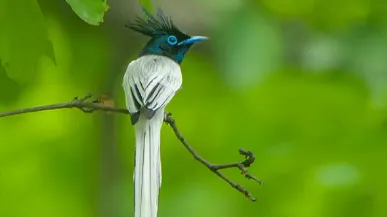
Raipur | Correspondent: A viral video showing an Indian Paradise Flycatcher, locally known as Doodhraj (Tersiphone paradisi), building a nest in the forests of Udanti Sitanadi Tiger Reserve is currently being praised as a notable achievement.
The bird featured in the video is also the state bird of neighbouring Madhya Pradesh shows constructing a cup-shaped nest on a tree branch using grass, plant fibres, and spider webs.
According to ornithologists, this is the normal nesting behavior of the Indian Paradise Flycatcher, a species that is widely distributed across the forests of Central India.
Experts point out that the bird has been recorded in almost all major forest landscapes of Chhattisgarh, including Bastar, Kanger Valley, Abujhmad, Udanti-Sitanadi, Achanakmar, Barnawapara, Gomarda, Surguja, Jashpur and Korea. The species is also regularly seen in and around Raipur, where local birdwatchers have documented its breeding activity for years.
The Doodhraj is an insect-eating bird known for catching insects in flight. Its breeding season generally extends from April to July, during which both male and female birds participate in nest building and raising chicks. The use of spiderwebs in nest construction is a well-known characteristic of the species.
Bird experts say the presence of a nesting Paradise Flycatcher inside a protected forest is a positive sign of biodiversity, but it does not represent a new scientific record or an extraordinary conservation success.
A Raipur-based bird expert told CG Khabar that protected areas face more pressing challenges, including habitat protection, biodiversity monitoring, water conservation and managing human-wildlife conflict.
"The nesting video is beautiful and reflects the biodiversity of the forest. But presenting it as a major achievement can create a misleading impression. Such nesting activity is common and has been documented for decades," the expert said.
Conservationists argue that the performance of a protected area should be assessed through scientific monitoring, habitat conservation and measurable conservation outcomes rather than routine wildlife sightings.
They add that while the Doodhraj remains one of India's most striking birds, its nesting in Chhattisgarh is not unusual. Experts say greater public attention should instead be directed toward the long-term conservation challenges facing the state's forests and wildlife.