India’s food plate is getting pricier and less nutritious

Ayushi Sharma | Raipur: Food prices in India have begun to feel like a suspense story unpredictable and dramatic. One day tomatoes touch the sky, the next, onions bring tears even before chopping. A new IndiaSpend report has revealed that the cost of a plate of food is steadily increasing. In Chhattisgarh, the monthly food cost for one person in September 2025 stood at ₹1,601.
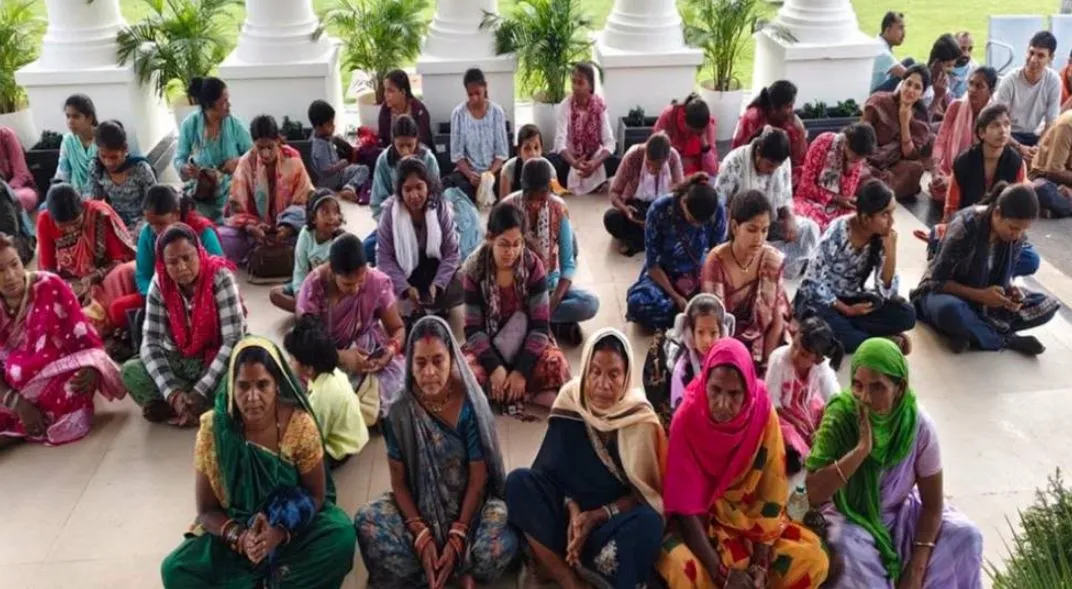
Chhattisgarh’s fields are lush and green, filled with the aroma of paddy. The soil is fertile, yet the plate is lacking in nutrition. While most families receive free rice and wheat under the National Food Security Act (NFSA), these grains make up only a small part of a balanced diet. Pulses, vegetables, milk, and oil still need to be bought from the market and that’s where the problem lies.
According to IndiaSpend, grains account for just 5% of a family’s food expenses, meaning the remaining 95% goes toward items outside the Public Distribution System (PDS). For poor families earning ₹6,000–₹7,000 a month, spending over ₹6,500 just on food means little is left for children’s education, healthcare, or clothing.
The report estimates that a basic vegetarian meal including pulses, rice or flour, onions, potatoes, tomatoes, some oil, milk, salt, and sugar costs ₹28.85 per plate. A family of four needs ₹230–₹240 daily for two meals. For those earning ₹400–₹500 a day, food alone becomes a heavy burden. Many rural families, therefore, skip milk, cut down on pulses, or cook vegetables only when prices drop.
This isn’t just about affordability it’s about nutrition. Around 12% of Indians are malnourished, meaning they eat enough to fill their stomachs but don’t get the nutrients their bodies need. The issue is more severe in tribal regions of Chhattisgarh, where children often suffer from deficiencies of protein and iron. A CRISIL report shows that 40% of rural and 10% of urban Indians can’t afford two full vegetarian meals a day an alarming figure for a state where jobs and incomes are already limited.
The government extended free grain distribution under NFSA till 2029, but experts warn that rice and wheat alone cannot ensure good health. “Grains fill the stomach, not the body,” says the report pointing out the absence of proteins, vitamins, and minerals in the average diet.
The 2025 monsoon brought heavy rainfall across several states, including Chhattisgarh, leading to floods in some areas. Despite this, vegetable prices remained mostly stable due to a strong wheat harvest that balanced food markets. However, in districts like Bastar and Kanker, damaged roads during the rains still pushed up potato and onion prices, showing that not just weather but infrastructure affects food costs.
An RBI study has warned that climate change rising temperatures and uneven rainfall could raise vegetable prices by 1–1.5%, linking food inflation directly to weather changes.
Across states, food costs vary widely. Madhya Pradesh offers the cheapest food basket, about ₹6,002 per month for a family of four, while Andaman & Nicobar Islands and Mizoram cross ₹9,000. Chhattisgarh stands in the middle, at ₹6,405.72. Yet the gap in nutrition persists everywhere.
Experts suggest expanding the PDS to include pulses and edible oils, and promoting the Millet Mission more widely. Traditional grains like kodo, kutki, and ragi are cheap, nutritious, and climate-resilient but today, they’re more common in city supermarkets than village markets.
Strengthening local and weekly markets could also help. If farmers sell directly to consumers, middlemen would be eliminated, stabilizing prices. Setting up small village markets or mobile stalls once or twice a week could provide affordable and fresh vegetables to rural families.
Reports like Food Price Watch remind us that a plate of food reflects more than hunger it mirrors our economy, our climate, and our policies. True prosperity, after all, is when every kitchen fire burns steadily, spreading not just warmth but also nourishment.