
Bilaspur railway flouts NGT rules, spreads coal pollution
Bilaspur railway zone violates NGT rules, spreads coal pollution
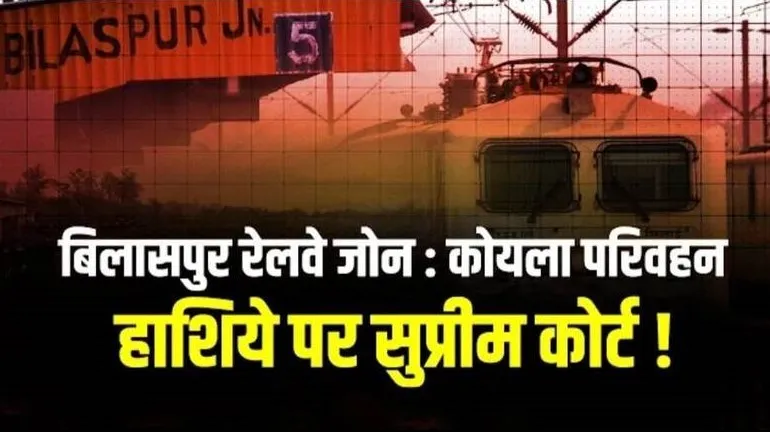
Bilaspur | Correspondent: Bilaspur railway zone continues to violate the coal transportation norms despite the guidelines issued by the National Green Tribunal (NGT).
The South Eastern Central Railway (SECR) officers in Bilaspur zone have been transporting coal uncovered in wagons disregarding NGT rules and High Court directives.
This blatant violation is not only affecting the environment but poisoning several lives endangering the health of millions of people living in Chhattisgarh and neighboring states.
According to the NGT rules, “Coal transportation may be undertaken by covered Railway wagon (railway wagons covered by tarpaulin or other means) and/or covered conveyer beyond the mine area. However, till such time enabling Rail transport/conveyer infrastructure is not available, road transportation may be undertaken in trucks, covered by tarpaulin or other means”.
Bilaspur railway zone is known for its freight transportation. In the financial year 2024-25, it transported 250 million tonnes of coal in 2023.
Chhattisgarh is the second-largest coal-producing state in the Country, mined 184.895 million tonnes of coal in the financial year 2023. Most of this was transported by train to different industries across the country.
However, all these transportations is happening in open wagons defying the environmental regulations and worsening pollution levels.
Negligence Despite Court Orders
Environmental experts and legal professionals, including Supreme Court lawyer Sudeep Srivastava, have condemned the railway's negligence. He emphasized that despite repeated court orders, SECR continues to violate transportation norms, putting millions at risk.
Even when the NGT issued detailed guidelines to the Ministry of Railways, directing the use of tarpaulin sheets to cover coal wagons, the railway authorities ignored the rules.
The State Pollution Control Board, responsible for enforcing the guidelines, has failed to monitor or act against these violations.
Severe environmental and health hazards
The coal dust generated during mining, loading, and transportation spreads into the air severely affecting air quality.
This fine dust categorized as PM10 (particles smaller than 10 microns), is invisible to the naked eyes but is detrimental and leads to health issues. Prolonged exposure can lead to coughing, breathing difficulties, asthma, and bronchitis.
When it rains, coal dust dissolves into the water sources containing rivers, lakes and groundwater. This affects water quality and makes it unsafe for drinking, posing a risk of waterborne diseases.
Impact on agriculture and forests
Coal dust settling on plants and crops blocks sunlight affecting photosynthesis and reducing their ability to grow.
The dust also clogs the stomata (pores) of leaves, hindering respiration and transpiration, a phenomenon of breathing in plants. Over time, coal dust contaminates the soil reducing its fertility and lowering crop productivity.
In the forest areas, coal dust carried by the wind threaten the biodiversity. The fine dust particles leads to harming the flora and fauna.
Railways’ own safety guidelines disregarded
Ironically Railway itself had once issued an order stating coal loading and unloading should be done away from residential areas, schools, religious sites, and environmentally sensitive zones.
The order also suggested keeping the height of coal dropping low to minimize dust and constructing high dust-prevention walls around loading zones. It recommended regular spraying of water to reduce coal dust during transportation. However, none of these measures are being followed.